How does an aeroplane fly? Why formula one car does have such shape? How does a helicopter fly? Why does rocket are not designed like a square box? Why the airplane does have cylindrical fuselage (the cabin where we sit)? Why bullets are round but pointed tip? Why does the golf ball have dimples all over it? (Not to have cute smile) Why? You must be thinking and very rightly it is magic. Magic of nature and science, as Nature provides the virtue whereas science takes it over.
Aero-dynamics is not an alien stuff. In fact, it is a science dealing with the motion of fluid. Now if you remember, and Gas (let’s not go to plasma, keep it simple folks). What is then fluid? It is a substance, as a liquid or gas, that is capable of flowing and that changes its shape at a steady rate when acted upon by a force tending to change its shape. Air is a fluid so is liquid. Let us understand, what goes behind an airplane that makes it fly. It is all on the wings, not on the engine. Here is what happens.
There are actually four forces that act on the airplane. Lift, Drag, Thrust and Weight. Now there is another important thing or structure that is an AIRFOIL. Now what is this Airfoil, it is actually nothing, literally.
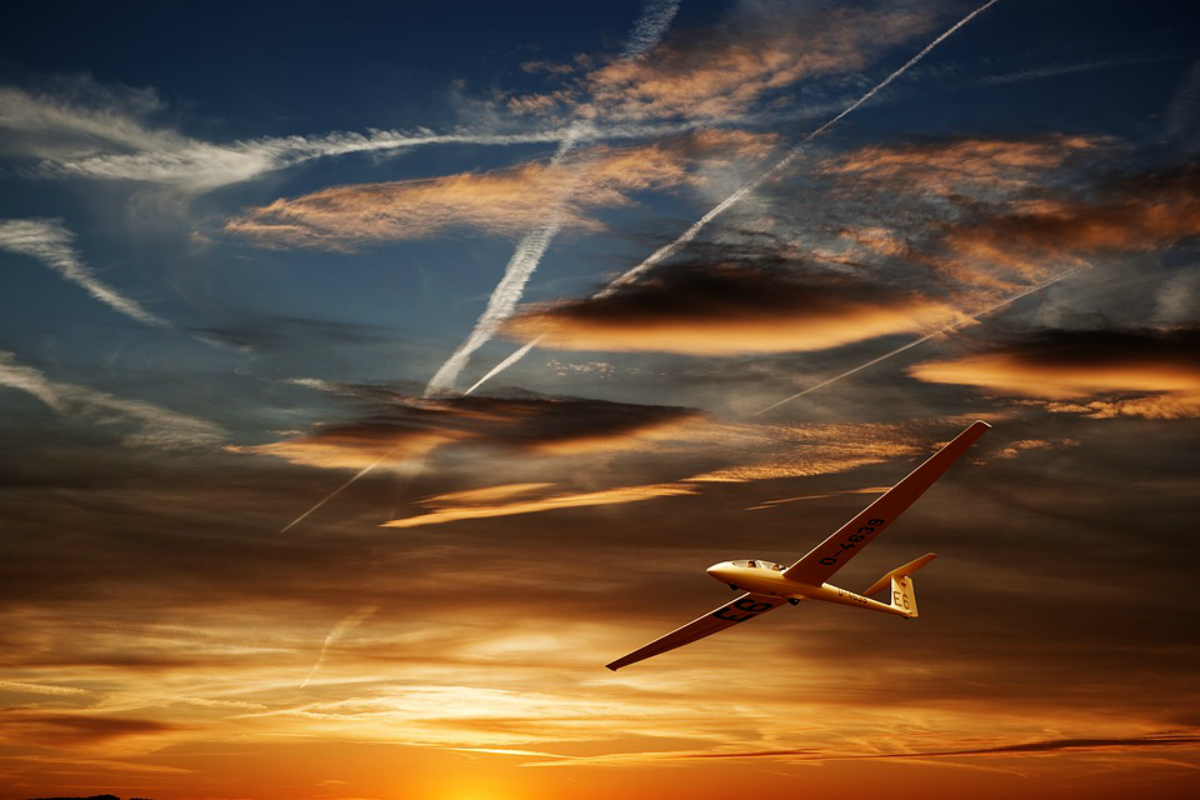
An airplane flies because of its airfoil structure. The structure when placed n moving air, produces lift and which actually pushes the aircraft upward. As the power of engine is pushing it forward, the pressure created under the wing tends to push the aircraft upward, which makes the airplane airborne. Now then the control surfaces like ailerons, flaps, stabilizers come into play to control the direction and turn of the airplane. When it comes to bullet, we call it External ballistics or exterior ballistics which is the part of ballistics that deals with the behavior of a non powered projectile in flight. Meaning, unlike rockets or missiles which are externally powered, at their tail, bullets do not have any external sources onto it to push it.
So what goes behind it? External ballistics is frequently associated with firearms like pistol, guns and such that deals with the unpowered free-flight phase of the bullet after it exits the barrel and before it hits the target, so it lies between transitional ballistics, the starting and terminal ballistics, the impact. These are the components of a standard long range bullet’s shape. The cylindrical portion is the part that is forced into the barrel and is cut by the rifling. The nose: Ogive shaped, and specifically designed to pierce through the air, fighting against drag.
The tail: In bullets designed for long range, the common shape is called boat-tail (tapered toward the end), and it is designed to reduce the turbulence behind the bullet and reduce drag. On the bullet, apart from these there are two points namely, the centre of mass, that is, the point where the bullet balances its weight. When in flight, the centre of mass is the only point of the bullet that actually follows the trajectory.
The centre of pressure, that is, the point where the aerodynamics force, in this case the drag of the air flow (and a little bit of lift), act on the bullet. Simply, when the spring hits the bullet tail, there happens a chemical reaction inside the bullet body, which pushes the bullet out of the barrel. The same reaction pushes the nose of bullet even harder and it cuts through the air, leaving the body behind. The speed of the bullet normally depends on the amount of gunpowder and the size of the bullet overall. The longer the bullet, the faster it moves and has high range and endurance. Just like snipers have long tailed bullet to travel greater distance.
The swing in cricket is too famous among aerodynamicist. How exactly the ball swings? It happens because of the laminar and turbulent flow created around the ball. You must have noted, the bowler always keep trying to shine one end of the ball, while keeping other size rough. The more shine the ball has, the flow of air slips around it. So, if the bowler has to get out swing that is ball turning away from the batsman, first he will shine the ball at one side and keep rough at the opposite side. Second, he will keep the ball’s seam at the centre of his palm, keeping the shiner side at his left that is away from the batsman and the un-shined side on right. What it does is, the air will push the blunt size of the ball as it is blocking the air flow leading the ball to move towards the shine side.
And hence the out swing. The same done in exactly the opposite way, the ball gets pushed inside that is towards the batsman side, hence in-swing. But it’s easy as it looks. It requires lot of practice and the ball should be positioned properly while attempting to bowl.
Similarly, the dimples of the golf ball have a particular meaning when it comes to real play. It is not because they look cute but the aerodynamics science prevails. Had the balls were smooth with no dimples, the flow of air would slip easily that is the air would be separated from the ball faster producing vortex at the other side and more drag.
But the dimples aids in the turbulent flow leading to the higher separation time between the air and the ball. The more time air is attached with the ball, which is because of dimples the longer range it covers. Rougher balls create their own turbulence right off the stick. The dimples and bumps create their own little pockets of suction, and their own small breezes that push the ball. Both of these things keep a layer of air in contact with the ball. Specifically, they keep that layer in contact with the side of the ball that trails behind. This creates a sort of glove of air around the ball and makes for a much smaller wake. That smaller wake pulls the ball back less, and lets it fly farther.
When it comes to formula one racing car, F1 aerodynamicists have two primary concerns: the creation of down force, to help push the car’s tyres onto the track and improve cornering forces; and the minimization of drag, a product of air resistance which acts to slow the car down. Although always important in race car design, aerodynamics became a truly serious proposition in the late 1960s when several teams started to experiment with the now familiar wings. Race car wings – or aerofoil as they are sometimes known – operate on exactly the same principle as aircraft wings, only in reverse. Air flows at different speeds over the two sides of the wing (by having to travel different distances over its contours) and this creates a difference in pressure, a physical rule known as Bernoulli’s Principle. As this pressure tries to balance, the wing tries to move in the direction of the low pressure. Planes use their wings to create lift, race cars use theirs to create negative lift, better known as down force. A modern Formula One car is capable of developing 3.5 g lateral cornering force (three and a half times its own weight) thanks to aerodynamic down force. That means that, theoretically, at high speeds they could drive upside down.
Aerodynamics has always been an experimental science. You will be surprised to know that each airplane are tested in a big wind tunnel where the air is left to blow in the maximum allowable velocity to check the impact it would have on the airplane. The real airplane is not kept in the wind tunnel rather the model of it with reduced size but keep all other factors constant.
The Aerodynamicists are those engineers or scientist who studies about the fluid nature. The modern science has derived a new subject popularly called as Computation Fluid Dynamics (CFD) where the computer simulation tries to solve the real time problem. With high speed computers involved, the algorithm tries to solve the complex fluid character and it behavior. The supersonic speed jets (travelling faster than the speed of the sound) undergoes treatment under CFD where the exact nature of air flowing over the machine is understood and the required result it achieved.
