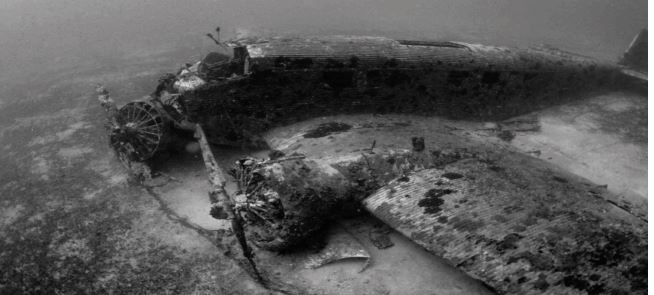
The motorized aircraft have taken to the air and not all have made it back to land in the intended way. What happens to the wrecks and the crash site?
Booming around the world aviation, one of the fields of interest aviation archaeology is outstanding and thrilling part to study. Aviation archaeology is primarily the locating and documenting of old aircraft crash sites. It focuses on the preservation of aircraft sites and of the history surrounding the activities that caused them. Aviation archaeology, relatively new field with its root sometimes after World War II is a sub-discipline of archeology. It is sometimes referred to simply as aviation archaeology, crash hunting, wreck hunting, or crashology. Its primary goal is to find, locate, document, recover and preserve the old aircraft crash sites and the history related to such crash sites. There are many ways to preserve crash sites and their history.
The sites at which aircraft crash are often a wealth of knowledge for individuals who are interested in learning more about aviation archeology. Most crash sites are nothing more than twisted hulks of metal, rubber, and glass, nothing of tangible value that are slowly deteriorating in the elements. Perhaps people lost their lives in this crash; maybe this plane was testing some new technology that ultimately saved the lives of pilots or air travelers. Every crash site tells a story. Visiting a crash site can have a tremendous impact on ones awareness and understanding of this time period and can provide quite an education.
Some sites are left in their original scenario so people can see the crash site in its natural setting. The crash site’s location and decomposing elements are also taken into consideration. The parts and wrecks that cannot be used for flying or static displays and located in good preservation environment are important in historical and educational value (as memorials and teaching tools). During WWII, there were many aviation accidents .These mostly included vintage military air crafts. Though this was part of the price of WWII as well as the Cold War many of these people have been forgotten and the history lost. Therefore the purpose of aviation archaeology is to record these incidents in historical context rather than record just why it crashed as can (sometimes) be found in government records. Some of the most famous aviation crash sites have been found in the mountains and deserts of the American west. In addition, there are a number of lucrative aviation crash sites located in certain parts of England and Europe. There are many aircraft crash sites from the past; some remote, some accessible that lay dotted across our country. Yet there is no any archeological activities being conducted nor initiated to preserve the sites by the responsible authorities. Wreck chasing is now being done by the major aviation museums throughout globe. Professional aviation archaeologists may also be involved in the recovery of near-complete examples of wrecked or abandoned aircraft for profit. The clients of these professionals range from private individuals and aviation museums, to government agencies. Aviation archeology is practiced mostly as hobby but it can also be extended as a profession.
Crashes

- Two Frenchmen attempting to cross the English Channel in a hot-air balloon were killed when their balloon caught fire and crashed, in possibly the first fatal aviation accident on 1785, June15.
- 1927 May 8, French pilots Charles Nungesser and Francois Coli took off from Paris in their airplane named L’Oiseau Blanc (the White Bird), in an attempt to cross the Atlantic. Pilots and plane vanished during the flight.
- 1937 Feb. 9, 1937 May 6 In San Francisco United Airlines DC-3 crashed 2 miles from Mills Field. The copilot had dropped his microphone which jammed the controls preventing the pilot from pulling out of the glide. The plane crashed killing all 11 aboard.
Archaeology
- And 1937 May 6, at 7:25 p.m. the giant German airship (dirigible or zeppelin) Hindenburg burst into flames and crashed to the ground as it attempted to dock with a mooring mast at Lakehurst Naval Air Station in New Jersey.
- Hindenburg left Frankfurt on May 4 for its first transatlantic voyage of the 1937 season. A total of 36 died when the fire ignited the 16 hydrogen-filled cells and destroyed the zeppelin in only 34 seconds. This included 13 passengers, 22 crew members and one of the ground crew. The airship was 803 feet long and had private rooms for 50 passengers. It had an 11,000 mile range. A newsreel film of the Hindenburg Disaster was made. The true cause of the disaster remains a mystery, although crash investigators considered claims that Hindenburg was lost due to sabotage or an accidental charge of static electricity.
- 1942 Nov. 2, An amphibious PBY-5A aircraft foundered in rough weather, in the waters surrounding what is now the Mingan Archipelago National Park Reserve in the eastern Gulf of Saint Lawrence. The plane was based at Presqu’Ile, Maine, in the US, and serviced an airfield in the village of Longue-Pointe-de-Mingan, Quebec. Four of the crew escaped the flooding plane and were rescued by local fishermen rowing out from shore in open boats in rough seas.
- Five others perished, trapped inside. In 1941 and 1942, the US had constructed a series of airfields in Eastern Canada to ferry aircraft to Allied air forces in Northern Europe, as part of the so-called “Crimson Route.” Wreckage of the downed plane was found in 2009. In 2012 remains of the other crew members were recovered.
- 1948, March 12 Alaska, 24 merchant marines and 6 crewmen were flying from China to New York City, when their DC-4 slammed into Mount Sanford killing all 30. Pilots Kevin McGregor and Marc Millican discovered some mummified remains in 1999 while recovering artifacts to identify the wreckage they had found two years earlier.
- 1953 October 29, A British airliner with 11 passengers and 8 crew crashed into Kings Mountain, 10 miles west of Redwood City, California and all aboard were killed. William Kapell (b.1922), genius pianist, died in the crash. He was returning from a tour in Australia when his airplane crashed into a mountain outside San Francisco. A set of his 1944-1953 recordings was released in 1998 by RCA. In 1999 BMG released “The William Kapell Edition,” a nine-disk set.
- 1985 June 23, All 329 people aboard an Air India Boeing 747 were killed when Flight 182 from Montreal to London crashed into the Atlantic Ocean near Ireland, apparently because of a bomb. An hour earlier, a bomb in baggage intended for another Air India flight exploded in a Tokyo airport, killing two baggage handlers.
- In 2000 Canadian police arrested 2 men of Sikh origin for the bombing. In 2001 Canadian prosecutors filed murder charges against Inderjit Singh Reyat. In 2003 Reyat was sentenced to 5 years for his role in making the bomb. Reyat spent 10 years in prison for building the bomb that exploded at the Narita airport, and another five years for helping make the Flight 182 bomb. In 2005 a Canadian judge acquitted 2 men who had been accused of conspiring in the case. Talwinder Parmar (1944-1992) was later assumed to have been the mastermind behind the attacks. In 2010 Reyat was found guilty of perjury. In 2011 he was sentenced to an additional 9 years in prison.
- 2012 June 7, central Florida a single engine plane crashed in the Tiger Creek Preserve killing Ron Bramlage (45), his wife and their 4 children. The family was returning home to Junction City, Kansas, from the Bahamas.
- 8 March, 2014 Malaysian Airlines Flight 370, the latest and one of the unsolved mysteries as well. Neither particular reason nor the crash site.
Every story is different and everything has something hidden. Archaeology and investigation are one of the most interesting chapters of aviation. Hold on tight, next issue we would bring the thrill back to you.
