Aircraft Maintenance Engineering or AME trains students in the operation and maintenance of Aircrafts and Helicopters in terms of Structures, Systems and Engines. The students learn how to use the engine trend analysis for the planning of periodic inspection and maintenance of various components in such a way as to reduce downtime of flying vehicles, simulation and validation through Engine testing at various laboratories.
A scale higher in the same field would be using the software, such as, MATLAB SIMULINK and LABVIEW. After completing the AME course the engineers will be familiar with Civil Aviation regulations of Light and Heavy Aircraft category as well as the relevant maintenance procedures for Aircrafts and Helicopters.
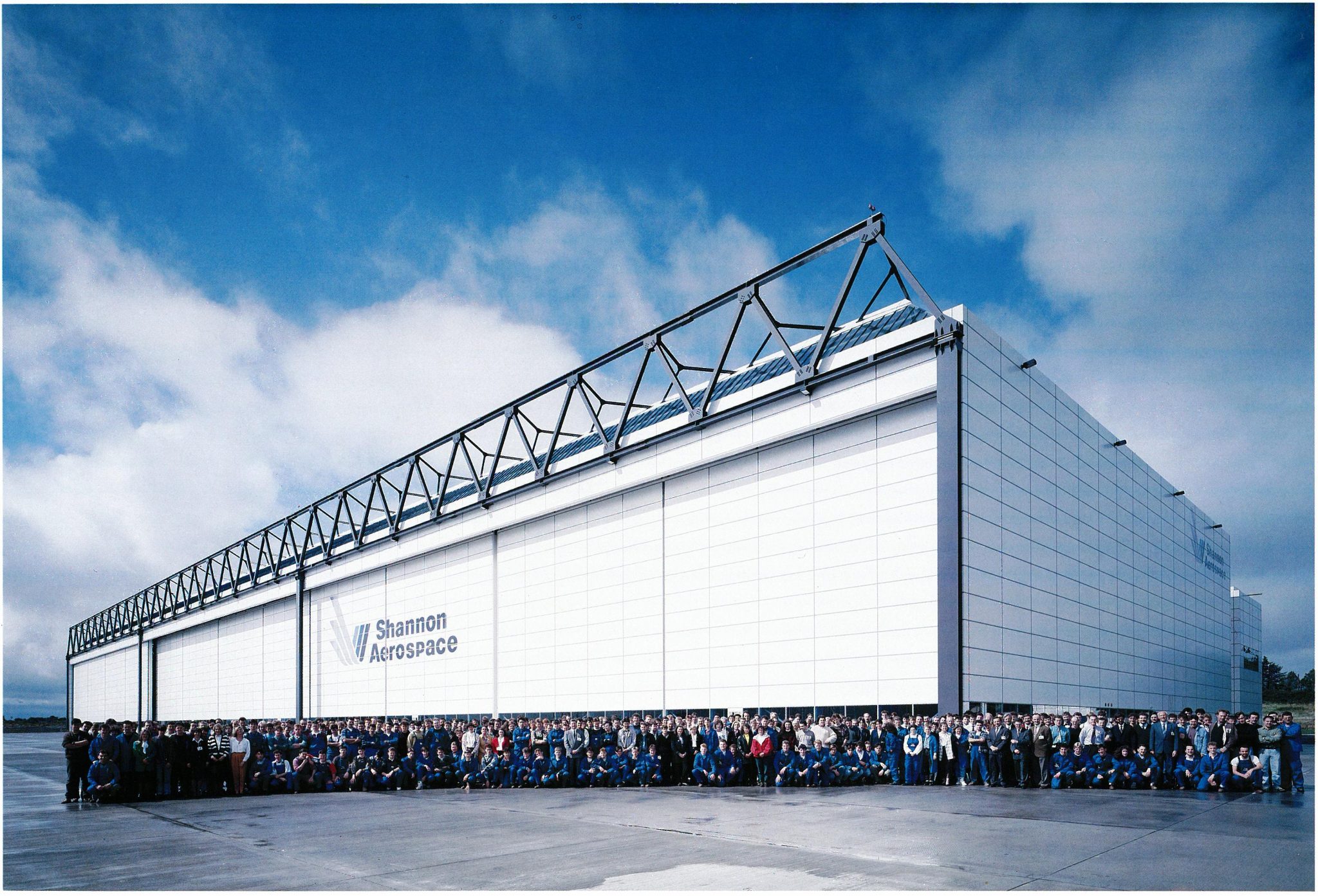
We do not have any aviation research and development or design and production industry in Nepal, which leads the industry to prefer Aircraft Maintenance Engineer who can maintain the aircrafts and helicopters. Nepalese aviation needs people who are well trained in maintenance and has acquired the licence to release the air machine. We present here Shannon Aerospace (SA), located in Ireland, an EASA approved maintenance school, a subsidiary of Lufthansa Technik, world renowned Aviation Company working in all aspects of aviation from Air operatorship, Maintenance Repair and Overhauling (MRO), training and management consulting.
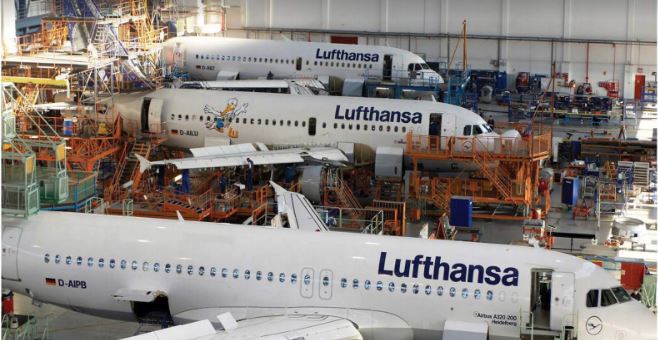
Shannon has also gained the reputation of base maintenance service on Boeing 734, 757 and 767 along with Airbus 319, 320 and A321. Moreover it also provides other added services as painting, engineering, line maintenance, technical services, CAMO (Continuing Airworthiness Management Organization) and training at the same time. Above all, SA holds both European Aviation Safety Agency (EASA) and Federal Aviation Administration (FAA) 145 approval. Following are the major services provided by Shannon Aerospace:
1. Base Maintenance
Base maintenance is heavy maintenance which requires the aircraft to be taken out of traffic. It is mainly a well planned maintenance, primarily C- and D-checks, but also includes repairs, modifications and upgrades of equipment, materials as required.
For our readers, there are normally four kinds of check when it comes to maintenance of the aircraft, namely A, B, C and D check.
Daily check
This check travels under several common names and post-flight, maintenance pre-flight, service check, and overnight to name a few. Walk around inspection by flight crew is not normally a part of a maintenance program. A daily check is a cursory inspection of the aircraft to look for obvious damage and deterioration. It checks for “general condition and security” and reviews the aircraft log for discrepancies and corrective action. A basic requirement is that the airplane remains airworthy. Usually, a daily check is accomplished every 24 to 60 hours of accumulated flight time. Examples of daily check items include:
• Visually inspection, a 360 degree inspection (getting around the airplane)
• Check fluid levels
• Check general security and cleanliness of the flight deck
• Check that emergency equipment is installed
‘A’ check
This is the next higher level of scheduled maintenance. It is normally accomplished at a designated maintenance station in the route structure and includes the opening of access panels to check and service certain items. Some limited special tooling, servicing, and test equipment is required. The ‘A’ check includes the lower check, i.e. Daily check. Examples of ‘A’ check items include:
• General external visual inspection of aircraft structure for evidence of damage, deformation, corrosion, missing parts
• Check crew oxygen system pressure
• Operationally check emergency lights
• Lubricate nose gear retract actuator
• Check parking brake accumulator pressure
• Perform Built-in Test Equipment (BITE) test of Flap/Slat Electronics Unit
‘B’ Check
This is a slightly more detailed check of components and systems. Special equipment and tests may be required. It does not involve, however, detailed disassembly or removal of components. Contemporary maintenance programs do not use the ‘B’ check interval. For a number of reasons, the tasks formerly defined for this interval have, for many airplanes, been distributed between the ‘A’ and ‘C’ check.
Heavy checks
The following two checks are traditionally known as heavy checks. They are normally accomplished at the main maintenance base of the airline where specialized manpower, materials, tooling, and hangar facilities are available.
‘C’ check
This is an extensive check of individual systems and components for serviceability and function. It requires a thorough visual inspection of specified areas, components and systems as well as operational or functional checks. It is a high-level check that involves extensive tooling, test equipment, and special skill levels. ‘C’ checks remove the airplane from the revenue schedule for 3 to 5 days. The ‘C’ check includes the lower checks, i.e. ‘A,’ ‘B,’ and Daily checks.
Examples of ‘C’ check items:
• Visually check flight compartment escape ropes for condition and security
• Check operation of Direct Current bus tie control unit
• Visually check the condition of entry• operationally check flap asymmetry system
• Pressure decay check Auxiliary Power Unit fuel line shroud
• Inspect engine inlet TAI (Thermal Anti Ice) ducting for cracks
System ‘D’ check
This can also be referred to as the Structural check. It includes detailed visual and other Non- Destructive Test inspections of the aircraft structure.
It is an intense inspection of the structure for evidence of corrosion, structural deformation, cracking, and other signs of deterioration or distress and involves extensive disassembly to gain access for inspection. Special equipment and techniques are used. Structural checks are man-hour and calendar-time intensive. The ‘D’ check includes the lower checks, i.e. ‘A,’ ‘B,’ ‘C,’ and Daily checks. This check removes the airplane from service for 20 or more days. Examples of ‘D’ check items include:
• Inspect stabilizer attach bolts
• Inspect floor beams
• Detailed inspection of wing box structure
Block maintenance is further modified when examining the special requirements of high-time/high-cycle airplanes. Older airplanes have increased maintenance tasks defined. This includes supplemental structural inspections, corrosion control programs, and aging system checks.
Executive and VIP airplanes have low utilization and represent another variation of block concepts. Task, intervals and blocks defined by the MRB (Maintenance Review Board) are based upon the higher utilization levels of air carrier operations. They don’t work for VIP airplanes. Consequently, separate packages are developed for VIP airplanes that are predominantly based upon calendar time.
2. Aviation Training
Hannon Aerospace is an EASA Part 147 approved maintenance Training organisation. Our Aviation Services Training Department is one of the most experienced and respected in the industry, providing Basic Training, Type Training and EASA Part145 Mandatory Continuation Training in addition to which they design and deliver a variety of training products and services for the marketplace.
3. Technical Services
SA, apart from base maintenance also works in other technical part of the aviation. Namely; aircraft painting, engineering, line maintenance, technical services, CAMO and training.
Why train at Shannon Aerospace
• Shannon Aerospace is an approved Part 147 Training Organisation by the European Aviation Safety Agency (EASA) to provide basic aircraft maintenance training. EASA is the Gold standard in aviation maintenance training and is accepted worldwide.
• Shannon Aerospace is one of the most experienced and respected training organizations in the industry. Shannon Aerospace assists, where possible, in the placement of students to gain experience in aircraft maintenance.
• Shannon Aerospace has a technologically advanced training School with outstanding training facilities and instructors who are experts in the industry. It is the perfect learning environment.
• One will have the opportunity to step outside the classroom and do practical training in a live aircraft maintenance environment and where there is a constant flow of passenger aircraft scheduled for maintenance through the maintenance hangar.
• The Aviation Training Department is renowned for getting the best out of our students and this is evident with our excellent pass rates.