Nepal is known for its historical monuments and culture. It is also the popular country for its tourism who travels overseas to visit those historical sites. Most of the historical sites to visit on capital city of Nepal, Kathmandu is Swyambhunath, Bouddhanath, Pashupatinath, Kathmandu Durbar Square, Patan durbar square, Buddhanilkantha, etc.
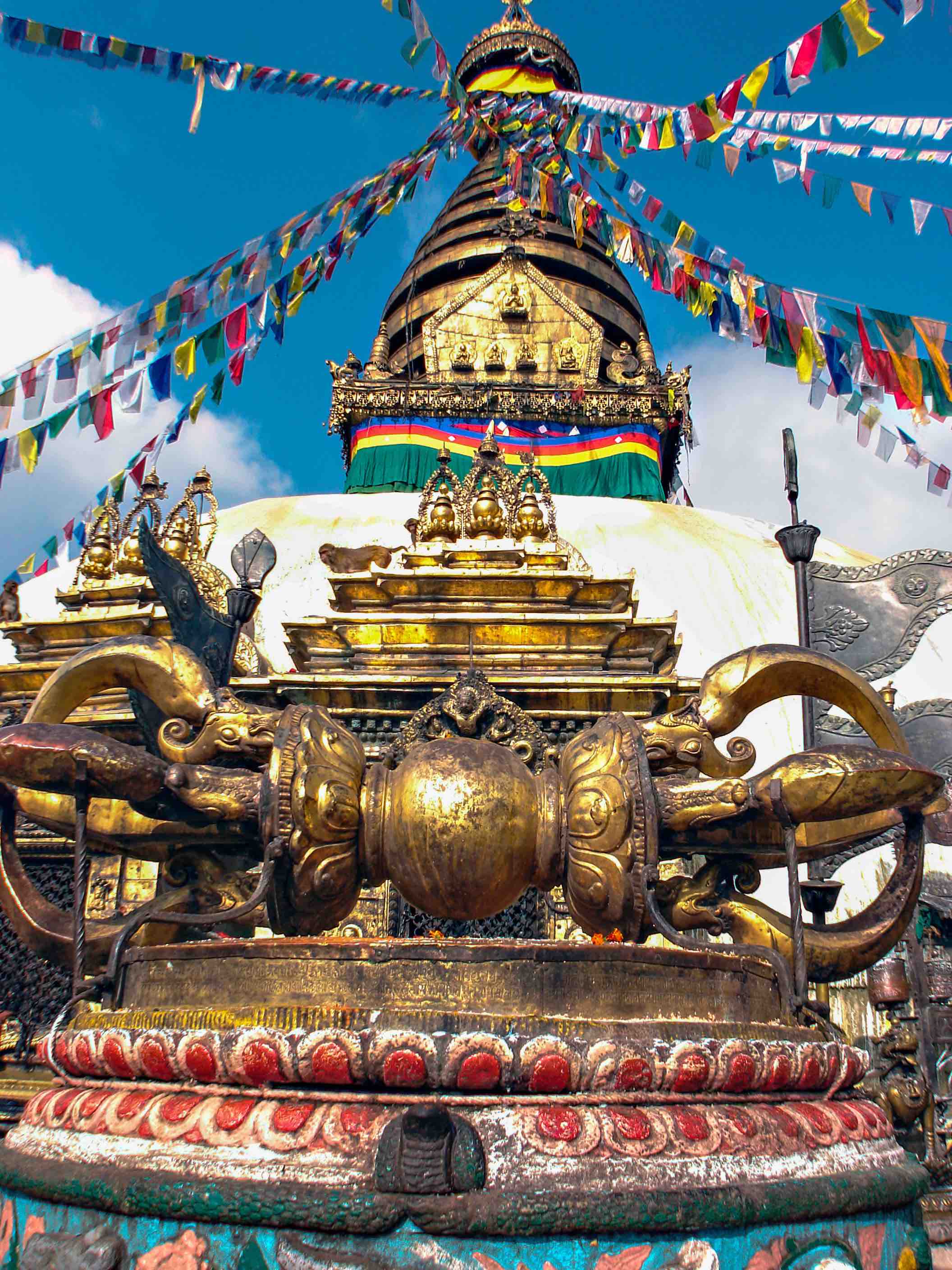
Right now, let us focus on one of the ancient religious and enigmatic holy shrines of Kathmandu valley which is Swyambhunath, also known as Monkey temple. Swyambhunath temple is the golden spire crowing wooden hill which is situated on the 3km to the west of Kathmandu valley and is visible for many miles and from all sides of Kathmandu valley. Swyambhunath is worshipped by mostly Hindus, Vajrayana Buddhist of Northern Nepal and Tibet and the Newari Buddhist of central and southern Nepal. There are two gates to enter the Swyambhunath temple where one gate includes 365 stairs to climb and is considered main doorway. Passing the stairs you will find the glided vajra and two lions guarding the entrance. Also, on each of four sides of the main stupa there is pair of big eyes. These eyes are considered the symbolic of God’s all seeing perspective. There is no nose between the eyes but rather a representation of the number one in the Nepali alphabet, signifying that the single way to enlightenment is through the Buddhist path. Above each pair of eyes is another eye, the third eye, signifying the wisdom of looking within. No ears are shown because it is said the Buddha is not interested in hearing prayers in praise of him.
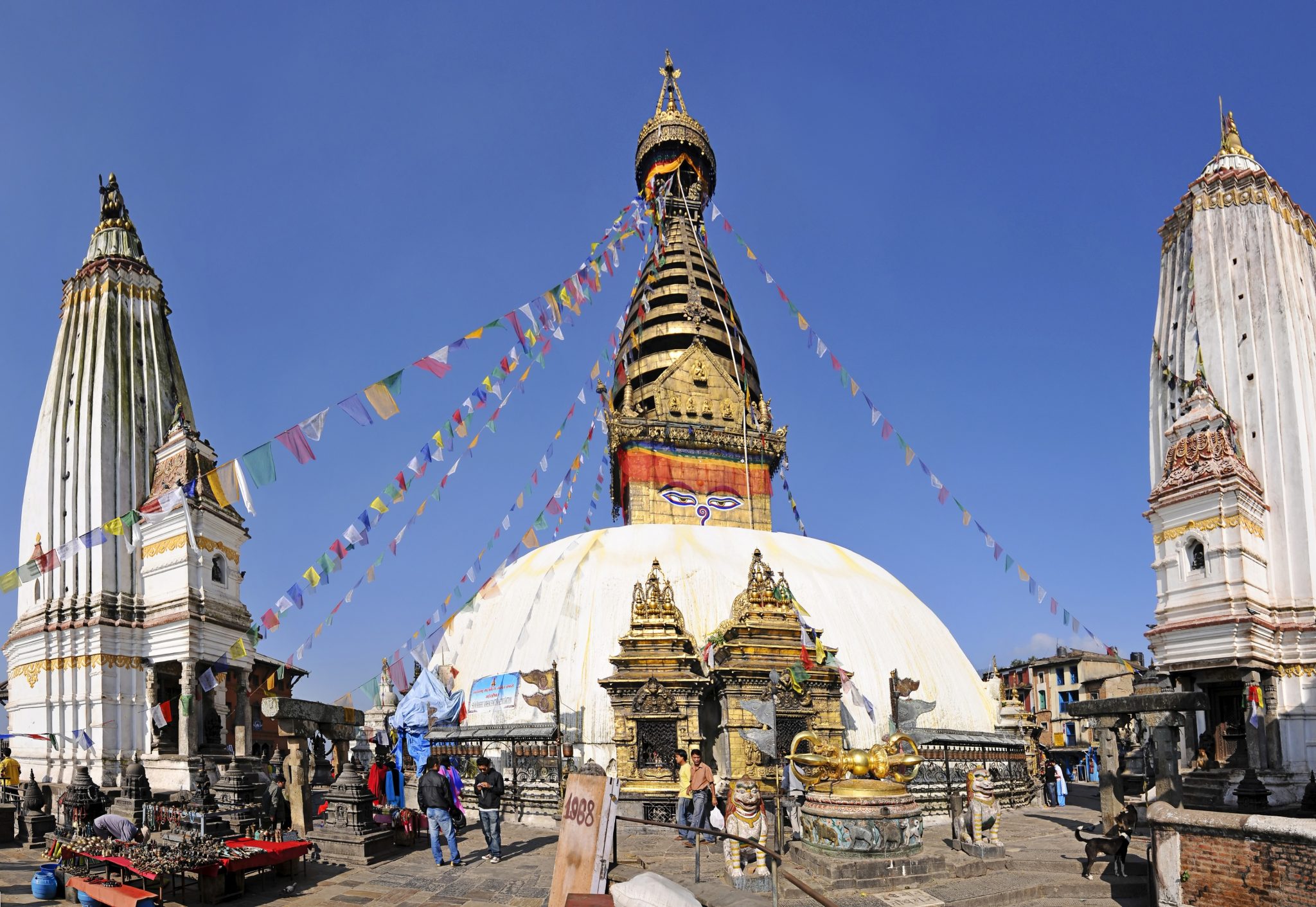
Swayambhunath stupa in Kathmandu
The surrounding area of stupa is filled with chaityas, temples, painted images of deities and numerous other religious objects. There are many small shrines with statues of Tantric and shamanistic deities, prayer wheels for the Tibetan Buddhists. On the top of hill of Swyambhu there aligns a Shantipur temple which is recognized as the place of peace inside of which in a secret, always locked.
Taking you back to the history on how Swyambhunath emerged, it is a mystery which is said to be emerged on its own which is why the name is Swyambhunath means ‘self-created’ or ‘self-existent’. Written on some stone, it is said that the stupa was already an important Buddhist pilgrimage destination by the 5th century AD. A collection of legends about the site, the 15th century Swayambhu Purana, tells of a miraculous lotus, planted by a past Buddha, which blossomed from the lake that once covered Kathmandu valley. The lotus mysteriously radiated a brilliant light, and the name of the place came to be Swayambhu. During this time, the Bodhisatva Manjushri was meditating at the sacred mountain of Wu Tai Shan and had a vision of the dazzling Swayambhu light. Manjushri flew across the mountains of China and Tibet upon his blue lion to worship the lotus. Deeply impressed by the power of the radiant light, Manjushri felt that if the water were drained out of the lake Swayambhu would become more easily accessible to human pilgrims. With a great sword Manjushri cut a gorge in the mountains surrounding the lake. The water, draining away, left the valley of present day Kathmandu. The lotus was then transformed into a hill and the light became the Swayabhunath Stupa.
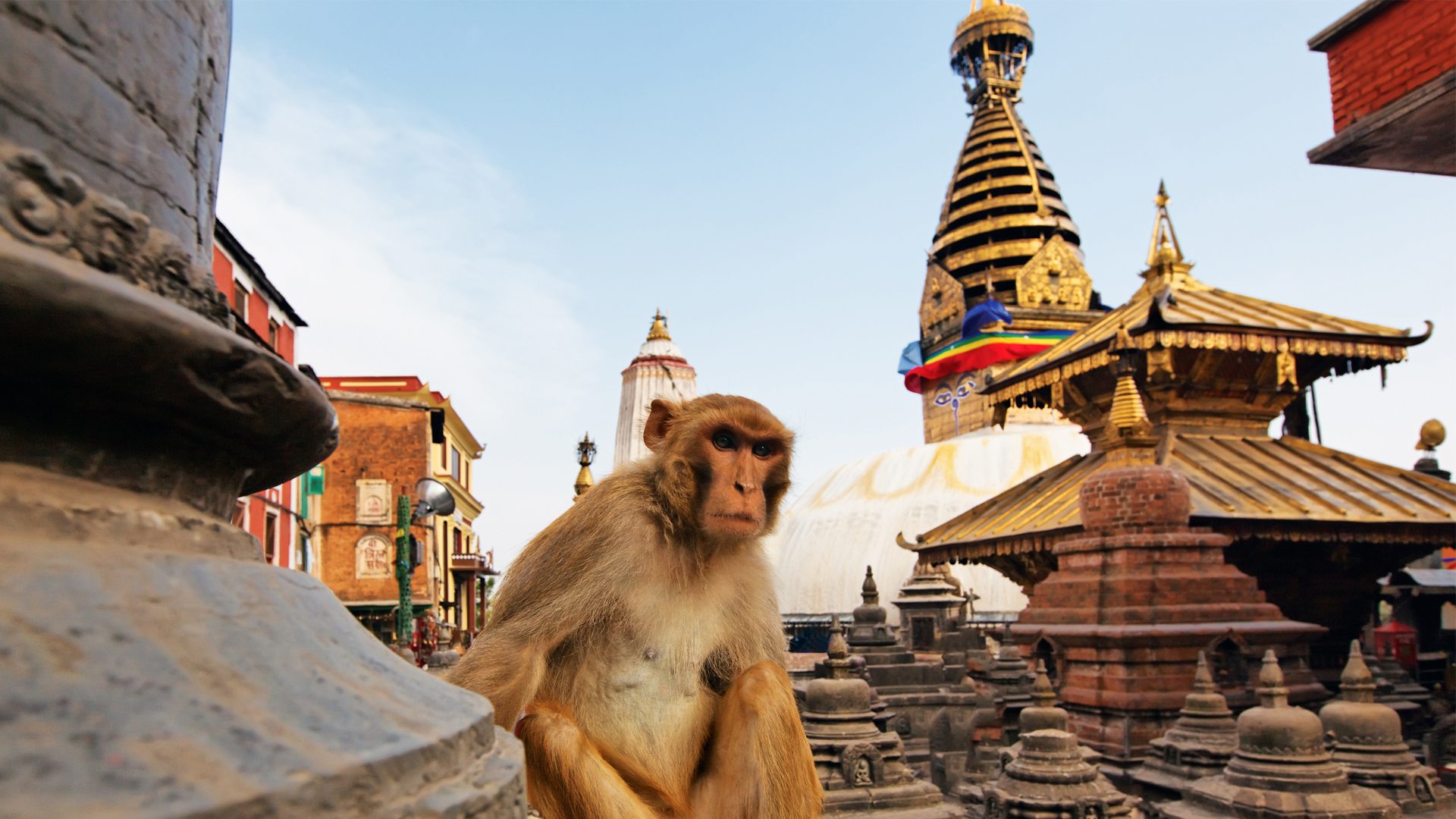
Moreover, Swyambhunath temple is also called as a monkey temple because thousands of monkeys hang around the Swyambhu over night after the pilgrimage and priest depart. However, based on the etiquettes of bodhisattva, Manjushree should keep his hair short and clean but he let her hair grow longer and got infected by lice. And there is a belief that those lice jumped out and became monkeys. Thus, the hill is full of monkeys.
Swyambhunath is the needed place to visit once we come to Pokhara as well as best time to visit Swyambhunath temple would be every morning before 9am or on Saturdays because it is the time where you get an opportunity to encounter the rituals and pilgrimage in the complex.
